
Nostalgia for Moments that Never Existed
An early review of pianist Alexander Malofeev's debut album, Forgotten Melodies

I was given early access to Forgotten Melodies, the unmissable debut recording of 24-year-old pianist Alexander Malofeev, which arrives February 27th from Sony Classical. I am excited to offer an in-depth look at the composers behind the exquisite works on this 2-disc album, along with some thoughts on its central themes.
Forgotten Melodies is a solo piano album featuring rarely-played works by four Russian composers: Mikhail Glinka, Nikolai Medtner, Sergei Rachmaninoff, and Alexander Glazunov. The liner notes point out that each of these composers left their homeland midlife, and none spent their final days there. Each spent some time living in Berlin along the way, which is where the young Russian pianist finds himself living today.
The Russian Romantics are certainly a diversion from my study of the German Baroque, but I found the album captivating. The lives and careers of these four Russian composers contrast greatly with that of my main subject, J.S. Bach, a man who could not have been more grounded in his faith, his family life, and his homeland. But Malofeev’s album has reminded me of the immense beauty and meaningful lessons to be found throughout the broader history of classical music.
The Composers
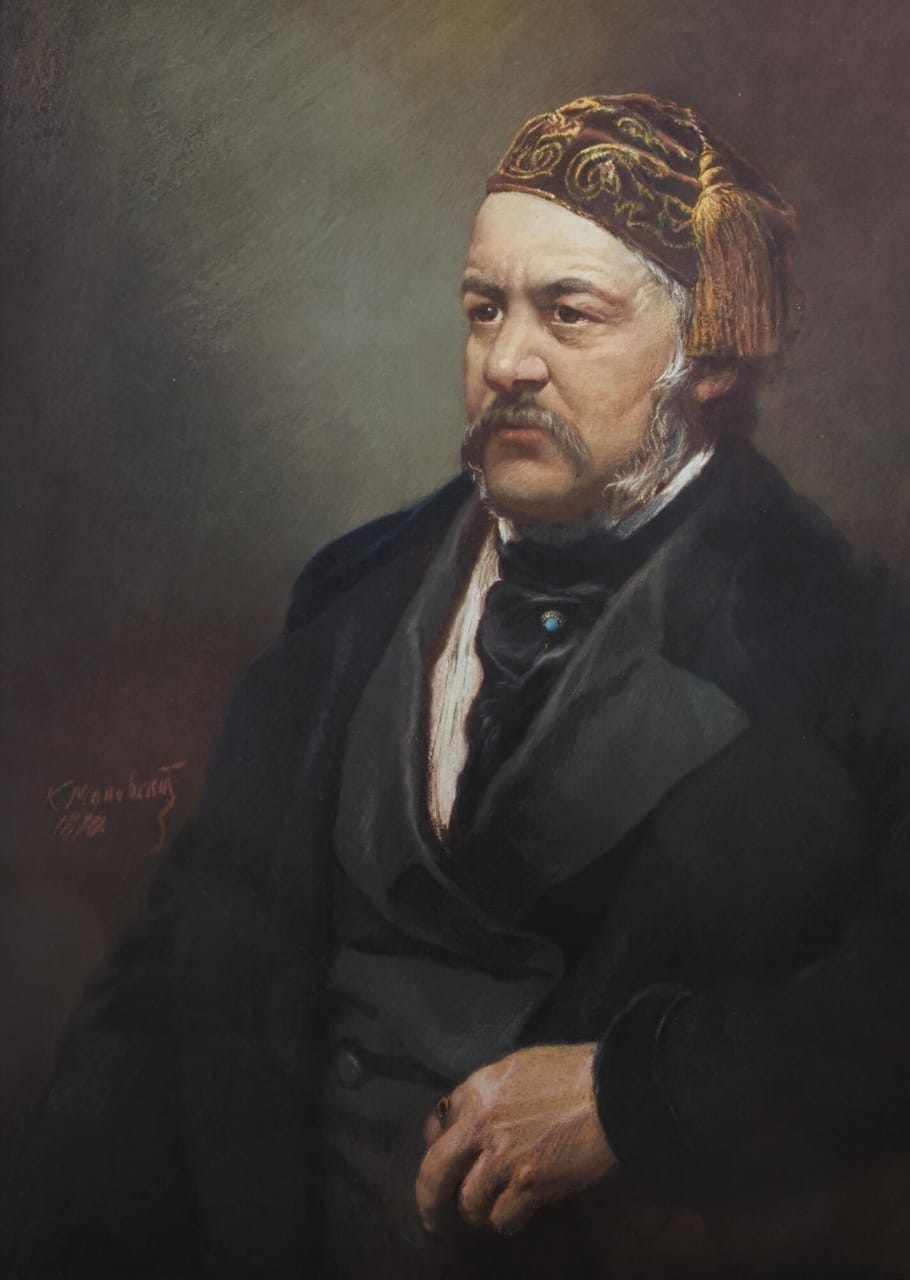
The album begins with works by Mikhail Glinka, the father of Russian classical music. Born into a wealthy military family in 1804 and raised by an obsessively overprotective grandmother, Glinka fell in love with music as soon as he got the chance to hear it. He studied music in St. Petersburg while preparing for a career in public affairs. Composing first as a dilettante, he left his job with the Ministry of Communications to explore music further in Italy and Berlin. When he returned to Russia, he got married and set to work creating the first Russian opera.
A Life for the Tsar impressed Tsar Nicholas I, landing Glinka the directorship of the court capella choir. Glinka’s wife, however, did not share his interest in music and was critical of his compositions. Complaining about his marriage, Glinka said, “Everything in life is a counterpoint, that is, contrast.”1 (Funny, considering that Bach managed to bring beauty out of counterpoint in both his compositions and his married life.) Glinka had his marriage dissolved, after which she remarried and he moved in with his mother.
Tchaikovsky would write of Glinka and his opera, “Like a nightmare, the questions continually haunt me: How could such colossal artistic force be united to such emptiness? And how came this average amateur to catch up in a single stride such men as Mozart and Beethoven?”2
When Glinka’s second opera, Ruslan and Lyudmila, was poorly received by the court and public, he grew bitter and left Russia. He spent time in Paris, Spain, and finally Berlin, where he died from a cold in 1857 at the age of 52.
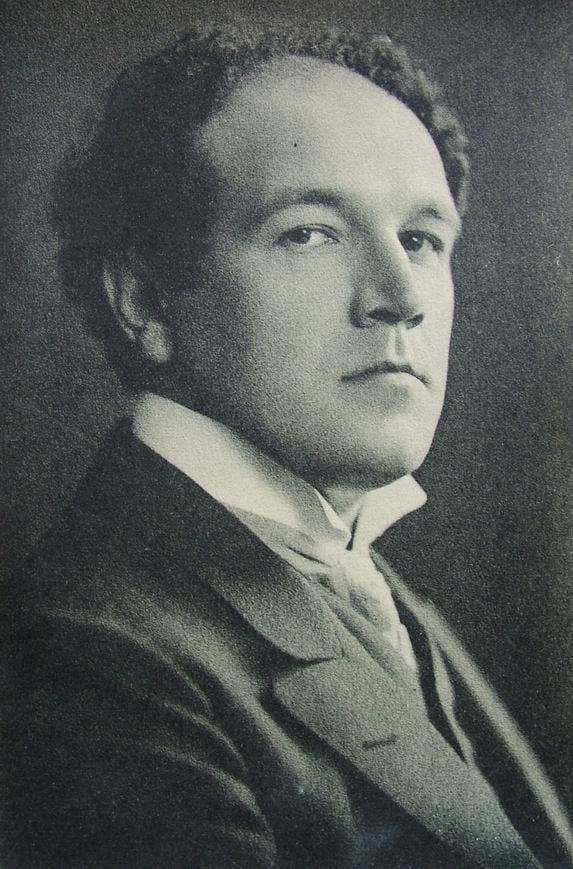
The centerpiece of the new album is the Forgotten Melodies cycle by Nikolai Medtner. Malofeev says, “I think it should be considered as one of the ultimate masterpieces of Russian music, and not as a little-known cycle by a little-known composer.” Malofeev began playing Medtner at the age of 11, esteeming his works on the same level as those of better-remembered masters. I only recently became acquainted with Medtner, thanks to a Substack post by David from Words Without Knowledge, and was delighted to see Medtner show up on a new album by a leading young pianist.
Medtner was born in Moscow in 1880, the fifth-born of six siblings, and got his first piano lessons from his mother before studying with Taneyev at Moscow Conservatory. Though an impressive, prize-winning pianist, he chose to focus on composing. This led to a lifelong friendship with Rachmaninoff, who called Medtner the finest composer of their time. Medtner married his brother Emil’s wife, Anna, a respected violinist, while Emil was interned in Germany during World War I—with Emil’s blessing. Nikolai and Anna moved to London in 1936, where they lived out their days playing and teaching music to modest success.
Not so self-obsessed as Glinka, it is no surprise that Medtner resonated with Bach’s compositional techniques, writing, “The theme is not always, and not only a melody. It is more than a melody, for - as Bach has proved it in his fugues, and Beethoven in his symphonies - it is capable of turning into a continuous melody the most complex construction of form.”3
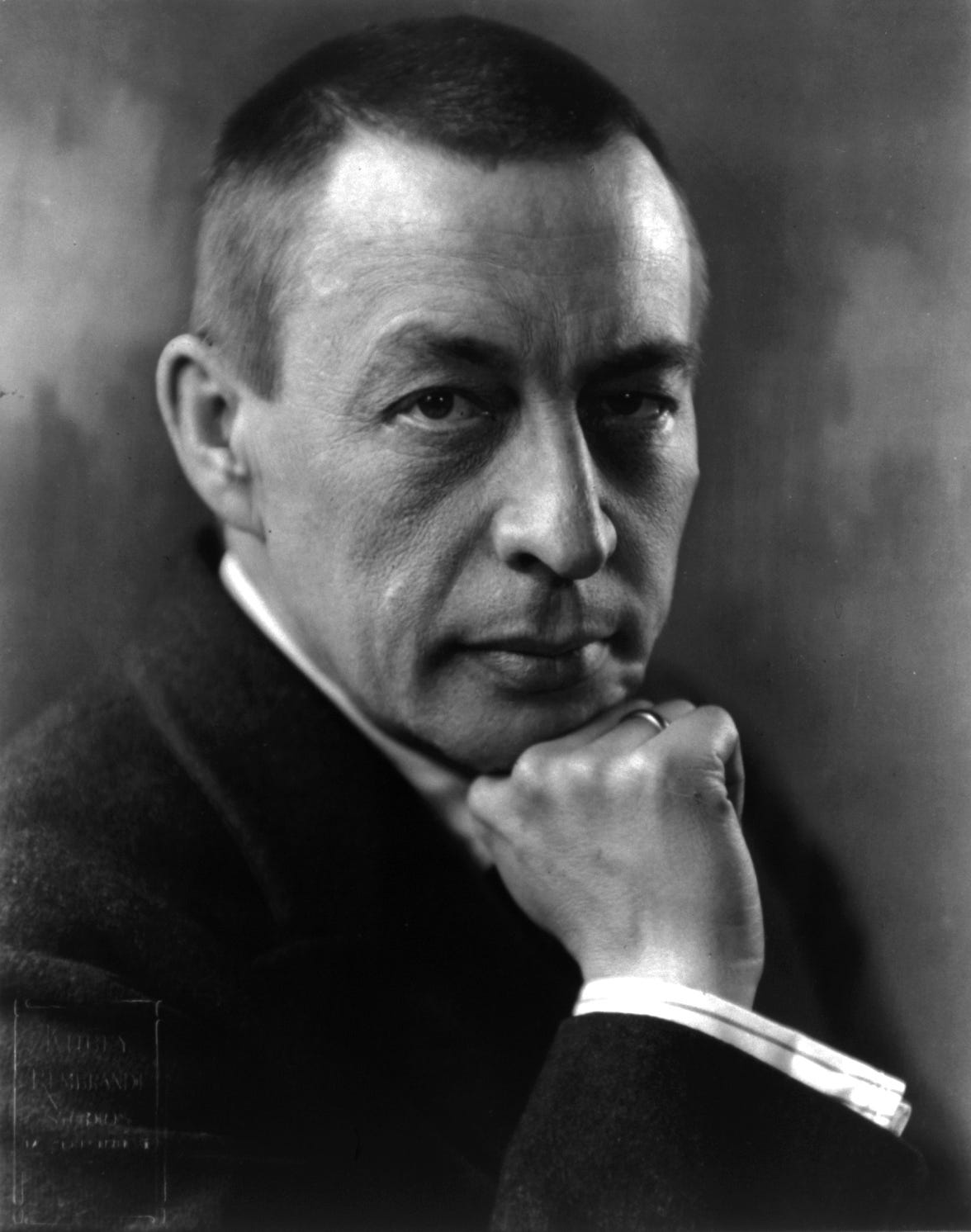
Malofeev’s playing then moves seamlessly into works by Sergei Rachmaninoff, including a late version of his second piano sonata, which the composer first wrote in Russia but later revised in Switzerland.
Born in 1873, Rachmaninoff came from an aristocratic and musical family. The third of six children, he began piano lessons at age four. Sergei’s father planned to send him to a prestigious and expensive military academy, but proceeded to gamble away the family fortune and lose their five estates. At 10, Sergei found himself living in a small flat in St. Petersburg, continuing piano lessons but suffering the loss of his 13-year-old sister to diphtheria, after which his father abandoned the family for Moscow. Sergei’s maternal grandmother came to help his mother, but more hardship was ahead with the death of Sergei’s 18-year-old sister. Sergei was struggling in school when his musical cousin Alexander recommended that he continue his piano studies at Moscow Conservatory.
He excelled there, both as a performer and composer, graduating at 19. But the following decade brought failed premieres, writer’s block, and depression. Sergei married his first cousin Natalya, without the blessing of the Russian Orthodox Church because of the union’s conflict with Canon Law, not to mention Sergei’s spotty record of church attendance. (Folks like to mention, with a snicker, that Bach “married his cousin,” but in Bach’s case, there were two additional degrees of separation, his wife Barbara being the daughter of his father’s cousin.)
The marriage was a happy one, however, and Rachmaninoff is the only composer on the album to become a biological father, having two beloved daughters, Irina and Tatiana, after whom he would name his music publishing company, TAIR. The family moved between Germany and Russia until the Russian Revolution caused them to leave Russia permanently. They emigrated to New York in 1918, and Rachmaninoff built a thriving career as a concert pianist in the States. He spent his last year in Beverly Hills, suffering from melanoma.
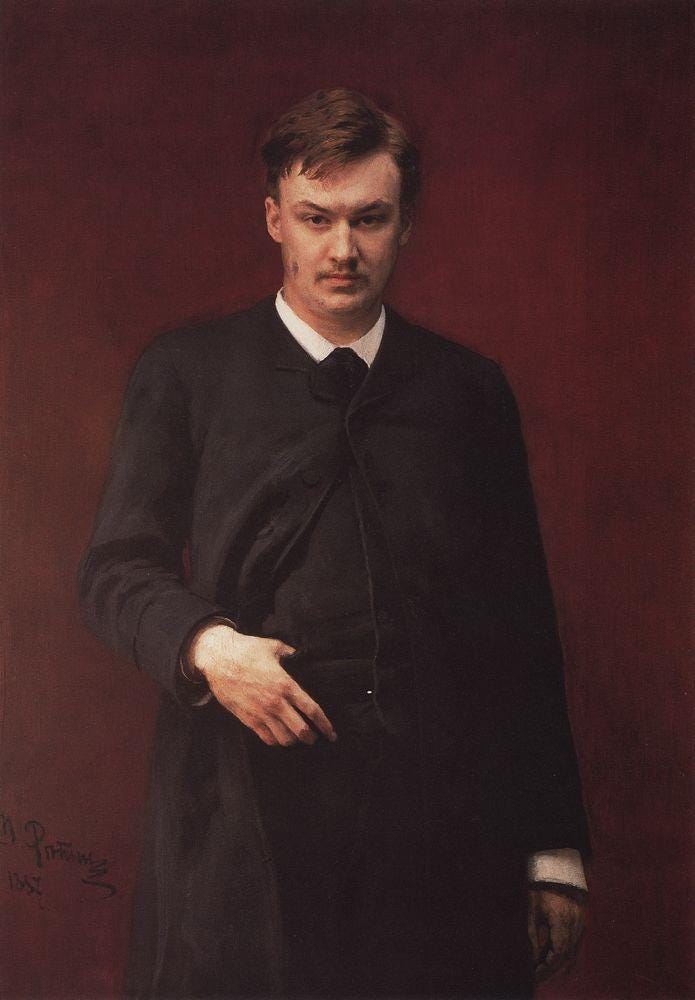
Alexander Glazunov was born in 1865 in St. Petersburg, the oldest of four children. His father was a wealthy third-generation bookseller, publisher, and amateur violinist, his mother an accomplished pianist. As a child, he would listen so intently to his mother’s playing that he would often wake in the middle of the night to relive the music stored safely in his memory.4 Beginning piano at 9 and composition at 11, he went on to study with Rimsky-Korsakov and saw the premiere of his first symphony at just 16, conducted by Balakirev.
In 1897, Glazunov conducted the premiere of Rachmaninoff’s first symphony, which went very poorly. Glazunov was largely to blame after under-rehearsing the work and leading the performance in what appeared to be a drunken state. More successful than his conducting ventures was his subsequent academic career, with decades-long tenure as director of the Saint Petersburg Conservatory. There, he showed fatherly care for young students like Shostakovich and Milstein, who came from less affluence than he did.
Glazunov emigrated to Paris in 1929, which was the same year he first married, at the age of 64. His wife’s daughter, Elena Gavrilova, was a fine pianist, having soloed the year before on Glazunov’s second piano concerto. Glazunov adopted Elena, and she took the name Elena Glazunova. He died six years later at 70.
Glazunov was the “G” in my recent Classical Composers ABCs post, where you can meet more great composers.
Longing for a Homeland
The music recorded for this new album, written by Russian composers ultimately displaced from their homeland, must run deep for the young pianist, who lives today in Berlin after speaking out against Russia’s invasion of Ukraine. While it is hard to imagine everything these artists have been through, their music can be powerful and touching for all who listen because we are all displaced to some degree in this life.
I recently had a great conversation with another pianist, my friend Daniel Overly, about the meaning of homeland. “I think homeland is two things,” Daniel said. “It’s a place, and it’s people.” I think he is right, and I reflect on these things often. I grew up in a large family in a small country town in central Ohio, feeling at home both there and in central Wisconsin, the home of grandparents and extended family. While I was attending music school in Pittsburgh, PA, my parents moved to a suburb of northern Ohio. I stayed in Pittsburgh and married a girl from Connecticut.
My wife and I talk regularly about where we belong, and have nearly moved “back” to Connecticut multiple times. Three years ago, after several years of renting and deliberating, we finally decided to put down roots and buy a home in Pittsburgh. Now, my parents are talking about moving back to Wisconsin, while my older brother is moving his family to the tiny town in central Ohio where we grew up. My younger brother and his family recently moved from Pittsburgh to his wife’s hometown in New York.
I know that many in my generation are considering these topics today. Something that has helped my wife and me comes from Jeremiah 29:4-7:
This is what the Lord of Armies, the God of Israel, says to all the exiles I deported from Jerusalem to Babylon: “Build houses and live in them. Plant gardens and eat their produce. Find wives for yourselves, and have sons and daughters. Find wives for your sons and give your daughters to men in marriage so that they may bear sons and daughters. Multiply there; do not decrease. Pursue the well-being of the city I have deported you to. Pray to the Lord on its behalf, for when it thrives, you will thrive. (CSB)
We take encouragement from the idea that, even in exile, we would still be called to build a thriving life for and through our family, contributing to the community around us. Where the desire for a better homeland persists, I also wonder if we are dealing with the kind of thing C.S. Lewis spoke about in Mere Christianity when he said, “If I find in myself desires which nothing in this world can satisfy, the only logical explanation is that I was made for another world.”
The CD for “Forgotten Melodies” is now available for pre-order on Amazon (as an Amazon Associate, I may earn a small percentage from purchases via this link)
A Feeling of Nostalgia
Malofeev points out another angle in the liner notes for his album, saying that what connects these composers for him is not so much their state of exile but an underlying sense of nostalgia. He says:
They all share the same feeling of nostalgia, but you cannot really figure out which moment in time they are actually nostalgic for. It’s almost as if they are nostalgic for a very similar setting which never really existed in history. It’s like it is totally made up, almost a dream world. Yet they all share it, and you can find it everywhere on this album.
Mulling this quote over while learning about the lives of these particular composers, I wonder if this sense of nostalgia for some idealized place came, as the valuing of a good thing sometimes does, by way of having missed out on it in the first place. In music, we deal not only with memories, but also with imagination, perhaps even imagined or wished-for memories. For better or worse, music is a powerful way to dwell in those places, real or imaginary.
Malofeev may seem young to be highlighting such feelings of nostalgia, but, having gone from a childhood practicing countless hours under strict Russian teachers to a life of constant touring outside his home country, perhaps he shares some of the longings captured by his musical forefathers. “I sometimes feel that music itself, my practice room and even the stage are more of a homeland for me than some particular place on earth,” says Malofeev. This is not an uncommon sentiment among musicians, and may be a temporary grace for the many artists displaced by politics and circumstances outside their control.
But music may be a tool for building a homeland off the stage, too. Rather than serving as a continual escape to old or imaginary places, it can inspire us to hold the people and places around us today most dear. If you are like me, listening to Malofeev’s album may bring back a flood of nearly forgotten memories and emotions. But perhaps the most fruitful way to meet them is to set about building upon them, turning to create a world of magic and memories for and with a new generation.
In my experience, fatherhood, not just music, offers profound opportunities to revisit the past, even see it redeemed. As we process feelings of displacement or nostalgia, our children are busy living in their own version of the “good old days.” We can help them build memories like the ones we treasure or wish for, in hopes that their nostalgia will one day take them back to beautiful places that really did exist.
You must know that there is nothing higher and stronger and more wholesome and good for life in the future than some good memory, especially a memory of childhood, of home.
—Fyodor Dostoevsky, The Brothers Karamazov
Tchaikovsky, The Life & Letters of Peter Ilich Tchaikovsky
Medtner, The Muse and the Fashion: being a defence of the foundations of the Art of Music
Tait, Possessed by Music: An Outline of the Life and Achievement of Alexander Glazunov
Can’t wait to listen to this one man. You’re expanding my music horizons (and my family’s).
I want to add, in 1917 the Bolsheviks were taking houses and private property. Rachmaninoff fled with wife and 2 daughters on an open sled to Finland. That image of him leaving everything, his home and all possessions, and traveling on a sled always stays with me. And to finally settle in Beverly Hills. Wow.